

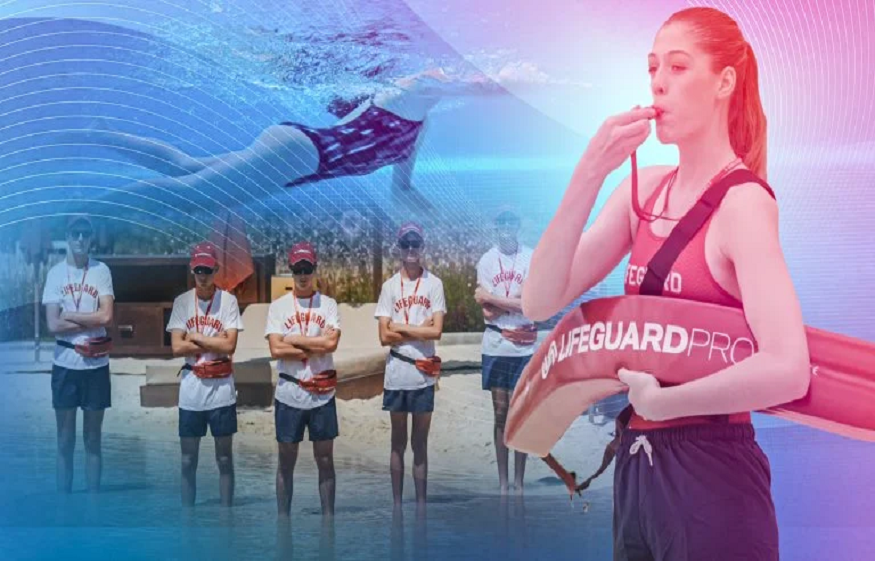
So you want to become a lifeguard. Maybe you’ve always loved the water, or maybe you’re looking for a meaningful summer job that pays more than retail and actually makes a difference. Either way, you’ve come to the right place. Lifeguarding is one of the most rewarding entry-level careers available and with the right certification, you can be poolside and protecting lives within weeks.
This guide walks you through everything you need to know before you register for your first class: prerequisites, what training actually looks like, how long it takes, what it costs, and what happens after you pass.
What Does a Lifeguard Actually Do?
Hollywood gives lifeguards a glamorous makeover, but the real job is far more demanding and more important than the movies suggest. A certified lifeguard is a trained emergency responder whose primary responsibility is preventing accidents before they happen and intervening swiftly when they do.
On any given shift, a lifeguard will scan the water using professional surveillance techniques, enforce pool or beach rules, respond to medical emergencies ranging from minor cuts to cardiac arrest, administer CPR and use an AED, manage crowd dynamics, and file incident reports. It is a job that demands constant vigilance, sharp decision-making, and strong physical conditioning.
Read More: Why programming assignment help is
Swimming Prerequisites You Must Meet First
Before you sign up for any certification course, you need to honestly assess your swimming ability. The American Lifeguard Association requires candidates to complete a swim-tread-swim sequence: jump into the water, fully submerge and resurface, then swim 150 yards using front crawl or breaststroke without stopping. Goggles are allowed.
You must also be able to tread water for at least two minutes using only your legs, and retrieve a 10-pound object from the pool bottom. These aren’t arbitrary hurdles — they reflect the minimum fitness needed to perform a real rescue. If you can’t do these yet, spend a few weeks building your swim endurance before enrolling.
You must also be at least 15 years old to take the ALA’s lifeguarding course.
Which Certification Should You Choose?
Several organizations offer nationally recognized lifeguard certifications in the United States. The American Lifeguard Association is one of the country’s most established programs, with over 30 years of operation and more than 250,000 individuals certified. The ALA is recognized by the U.S. Department of Labor as meeting national standards under the Fair Labor Standards Act, making its certification valid for employment across all 50 states, DC, and U.S. territories.
The ALA’s blended learning model is a major advantage: you complete theoretical coursework online at your own pace, then attend an in-person session to demonstrate practical skills. You don’t have to wait for a group class you can start immediately.
What to Expect During ALA Training
The ALA lifeguard course covers approximately 26.5 hours of combined instruction. The online portion covers water surveillance, rescue techniques, emergency response protocols, and health and safety standards through instructional videos, quizzes, and reading materials at your own pace.
Read More: Key Components of a High-Quality Nursing
The in-person component is where theory becomes action. You’ll practice in-water rescue approaches, safe victim extraction, spinal injury management, and CPR and AED drills until the techniques feel automatic. Employers are required to conduct pre-service and ongoing in-service training evaluations in line with the CDC Model Aquatic Health Code (MAHC).
Cost and Time Commitment
The ALA currently offers a $100 grant discount on first-time certification. The organization also offers a 30-day price match guarantee. Financing through Shop Pay is available at checkout.
Motivated candidates can complete the online portion over a weekend. Most candidates are fully certified within two to four weeks of enrolling.
What You Receive Upon Passing
Once you pass both components, you’ll receive a two-year certification in Lifeguarding, CPR/AED, and First Aid. Your credentials are uploaded to the National Verification System, which allows employers to instantly verify your status giving you a significant edge when applying for positions.
Next Steps after Certification
With your ALA certification, you’re eligible to apply for positions at community pools, water parks, beaches, resorts, and fitness centers nationwide. Keep your certification active by completing recertification before your two-year expiration. Consider exploring additional credentials like Water Safety Instructor or Aquatic Facility Operator if you plan to grow within the aquatics field.